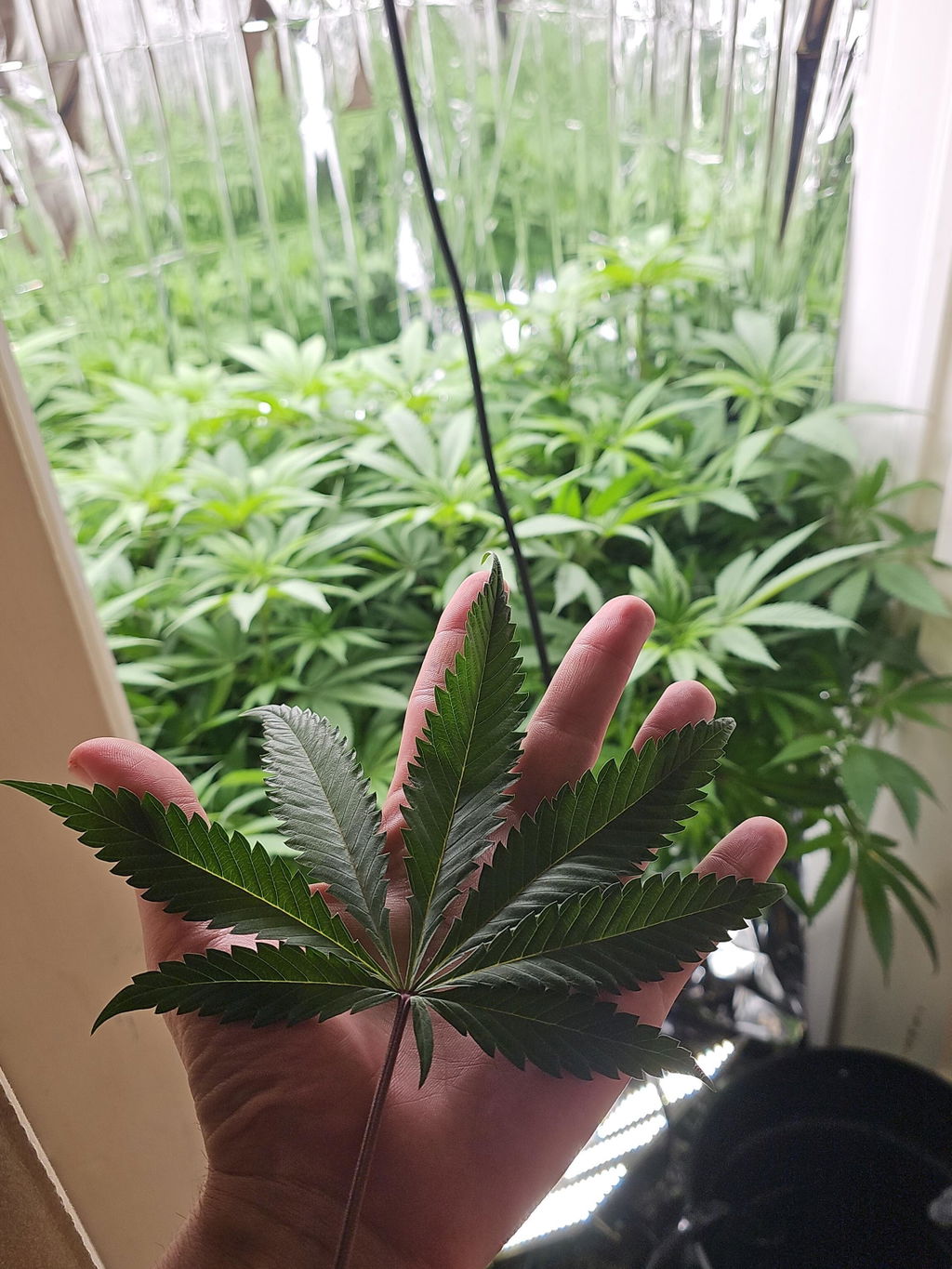
Description
Apple Fritter Feminized comes from a cross of Sour Apple and Animal Cookies, two strains with strong genetics of their own. That parentage puts her in the cookie family, and it shows in her dense, resin-heavy buds. Lab-reported THC runs very high, from 22% to 28%, so this is not a beginner's afternoon smoke.
Break open a bud and the smell hits first: think warm baked apples fresh from the oven. The taste follows with sweet, pastry-like notes, a touch of spice close to vanilla, and a quiet earthy base underneath. Resin coats these buds heavily, which is part of why growers keep coming back to her.
Indoors, she flowers in about 8 to 10 weeks and stretches into a tall plant, so give her room to grow. Yield can climb up to 2.1 oz per square foot indoors under strong light and good training. Between her height, her flowering time, and her yield potential, she suits growers with some experience who have vertical space to spare and want a strain built for stacking dense, resin-covered colas.
Grow info
Growing Apple Fritter takes a medium level of skill. She stretches hard, especially early on, and she needs a plan for both height and humidity control.
Indoor growing
Indoors, Apple Fritter grows fast and builds strong branches that can hold up her own weight. She flowers in about 8 to 10 weeks, though she can run a little longer depending on your setup. Keep the room warm with steady light, and she should stay close to that schedule.
Height is one thing to watch. She stretches quite a bit during the vegetative stage, so plan for extra vertical space before you start training. Indoor yield can reach up to 2.1 oz per square foot with training, or around 1.8 oz per square foot if you let her grow with less intervention. Strong lighting and steady climate control both help her finish well.
Late flowering is the tricky stretch. Her buds pack in tightly and trap moisture easily, which raises the risk of mold. Good airflow and low humidity during this stage may help reduce that risk.
Outdoor growing
Outdoors, Apple Fritter does best in a warm, dry climate. Mediterranean-style weather suits her well, though results will vary with your local conditions. Given enough space, she grows tall and wide, with branches that spread out to let light and air reach every part of the plant.
She finishes late, typically mid- to late October in a Mediterranean climate. Watch the weather closely if a rainy season arrives before harvest, since dense buds can hold water. Outdoor yield can reach about 1.3 to 1.8 lbs per plant, with larger, well-trained plants tending toward the higher end.
Training and plant care
Apple Fritter responds well to training, which makes her a good candidate even for growers still building experience. Topping, bending, or similar low-stress methods can help manage her height and open up her canopy for better airflow. Training may also support a fuller, more even yield, though results depend on your setup and experience.
More experienced growers can push training further to shape larger plants for bigger harvests. Either way, good airflow around the branches can help reduce the risk of mold as the dense buds fill in.
Flavors & effects
Flavors
Apple Fritter carries a smell close to warm baked apples, the kind you'd find in a bakery case. The taste leans sweet, with a creamy, pastry-like quality. A spice note close to vanilla rounds things out, backed by a light earthy tone underneath.
Effects
Reported effects start with a euphoric, mood-lifting feeling in the head. A warm, relaxing body sensation follows, which some describe as easing tension without a heavy knockout effect. At higher amounts, that relaxation deepens and the body may feel noticeably heavier.
With THC this high, newer consumers should start with a small amount and wait to see how it feels before taking more. Individual effects can vary from person to person. This is not intended as a medical claim, and results will differ based on tolerance, dose, and personal chemistry.
Dominant Terpenes
Caryophyllene
This terpene will give this strain a musky and spicy aroma. It can help with conditions like muscle spasms, pain and insomnia.
More about Caryophyllene
Limonene
This terpene will give this strain a fruity and citrus aroma. It’s also responsible for stress relieving and elevated mood effects.
More about Limonene
Pinene
This terpene will give this strain a pine and woody aroma. It’s also responsible for the focusing effects.
More about Pinene



 Ships 2-5 days
 Discreet packaging
 30+ years experience
 Secure payments