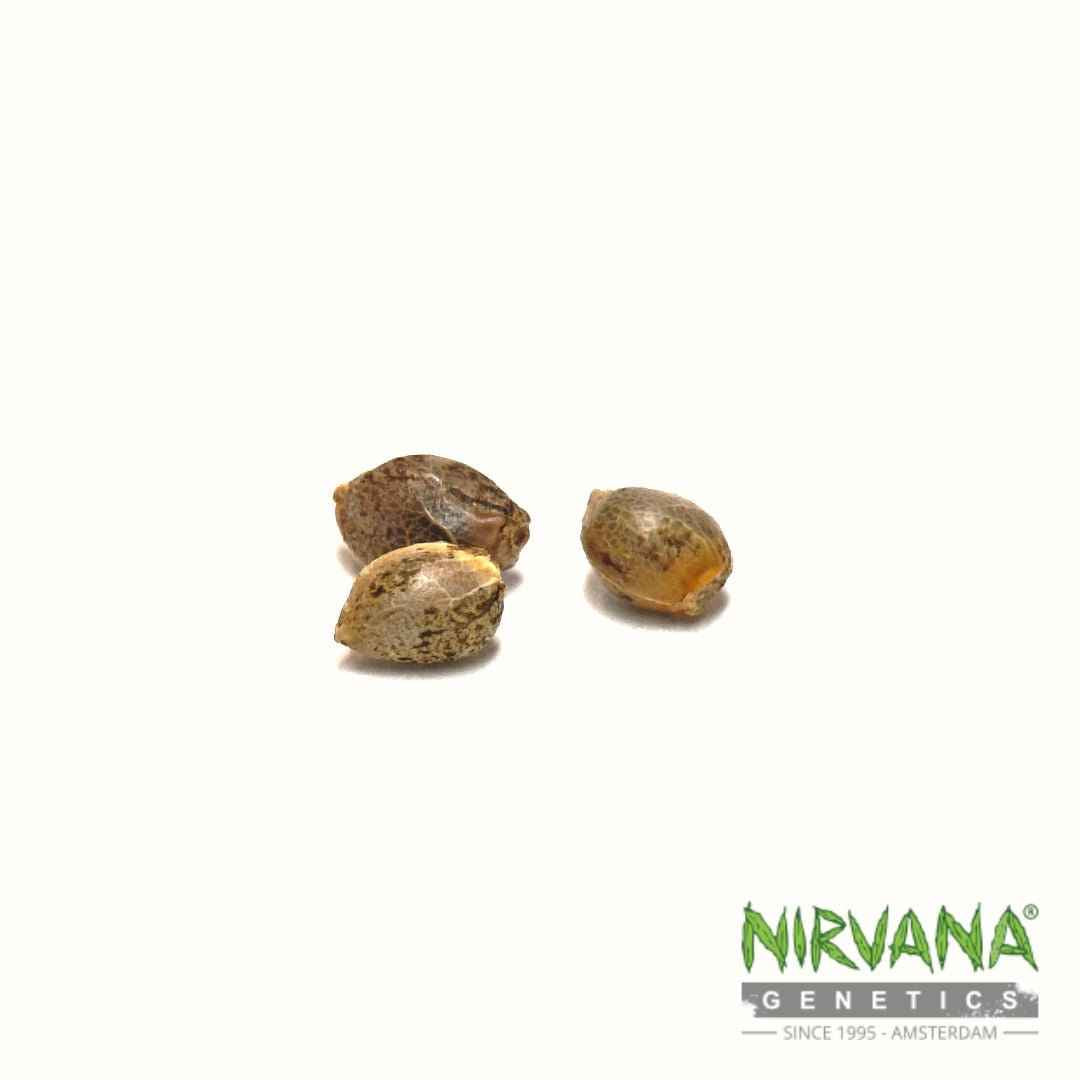
Description
Do Si Dos Feminized comes from crossing Girl Scout Cookies with Face Off OG, giving her an indica-dominant profile with reported THC in the 24%–28% range. That's a very high potency level, so this strain is best suited to consumers with some tolerance built up.
Break open a bud and pungent, earthy sweetness comes through first, with mint-like undertones giving her a desert-like aroma. The buds grow dense and chunky, covered in trichomes inherited from both parent strains.
Indoors, she flowers in about 8 to 9 weeks and stays fairly controllable in height, with only a slight stretch when flowering starts. Yield potential runs high, in the 1.5–1.8 oz/ft² range indoors. Given her easy grow rating, controllable size, and very high THC range, Do Si Dos Feminized suits growers with some experience who want a compact, indoor-friendly plant and consumers looking for a strong nighttime strain.
Grow info
Do Si Dos Feminized is rated easy to grow and shares similarities with Girl Scout Cookies, one of her parent strains. She grows compact with dense buds, and her height is fairly controllable, making her a workable option where indoor space is limited.
Indoor growing
Indoors, this strain's controllable size makes it easier to fill a grow space efficiently. Humidity management matters here since the buds grow dense: keeping humidity below 50% during early flowering and gradually lowering it to around 35% in the final two weeks is recommended to help prevent mold. Flowering takes about 8 to 9 weeks, and indoor yield runs 450–550 g/m², or up to about 1.8 oz per square foot.
Outdoor growing
Outdoors, Do Si Dos can grow larger than she does indoors, especially with plenty of space and sunlight during veg. She prefers a Mediterranean-style climate, warm and dry, though outdoor growing generally comes with better natural airflow, which helps with humidity control. Removing weaker inner branches, a technique known as lollipopping, can improve airflow and help the plant direct energy toward larger buds. She typically finishes in early to mid-October in Mediterranean conditions, sometimes earlier in hot, dry summers or later if nights stay warm and humidity is higher. Outdoor yield runs about 500 to 700 grams per plant, or roughly 1.1 to 1.5 lbs.
Training and plant care
This strain responds well to training thanks to her flexible branches and sturdy growth, making canopy control techniques a good fit even for more advanced methods. Because her branches are thick and support heavy, dense buds, she holds up well once trained.
Good airflow and humidity control are especially important for this strain given how dense her buds grow. Keeping conditions in check, particularly in late flowering, helps protect the buds from mold and the plant from mildew damage.
Flavors & effects
Flavors
Do Si Dos has a pungent smell with earthy, sweet, and mint-like notes that give her a desert-like character. The smell intensifies during flowering, so odor control indoors is worth planning for. The flavor is smooth and creamy, with a light sweetness reminiscent of Girl Scout Cookies and a touch of spice and herbal flavor.
Effects
Reported effects include relaxation, calm, and a euphoric lift. The body effects are often described as strong, potentially leading to couch lock, paired with a gentler cerebral lift that can boost mood. Given this combination, many associate this strain with nighttime use. Effects are subjective and can vary from person to person.
Given the very high reported THC range of 24%–28%, newer consumers may want to start with a small amount before taking more.
Dominant Terpenes
Limonene
This terpene will give this strain a fruity and citrus aroma. It’s also responsible for stress relieving and elevated mood effects.
More about Limonene
Caryophyllene
This terpene will give this strain a musky and spicy aroma. It can help with conditions like muscle spasms, pain and insomnia.
More about Caryophyllene
Linalool
This terpene will give this strain a floral and sweet aroma. It’s also responsible for relieving and calming effects.
More about Linalool