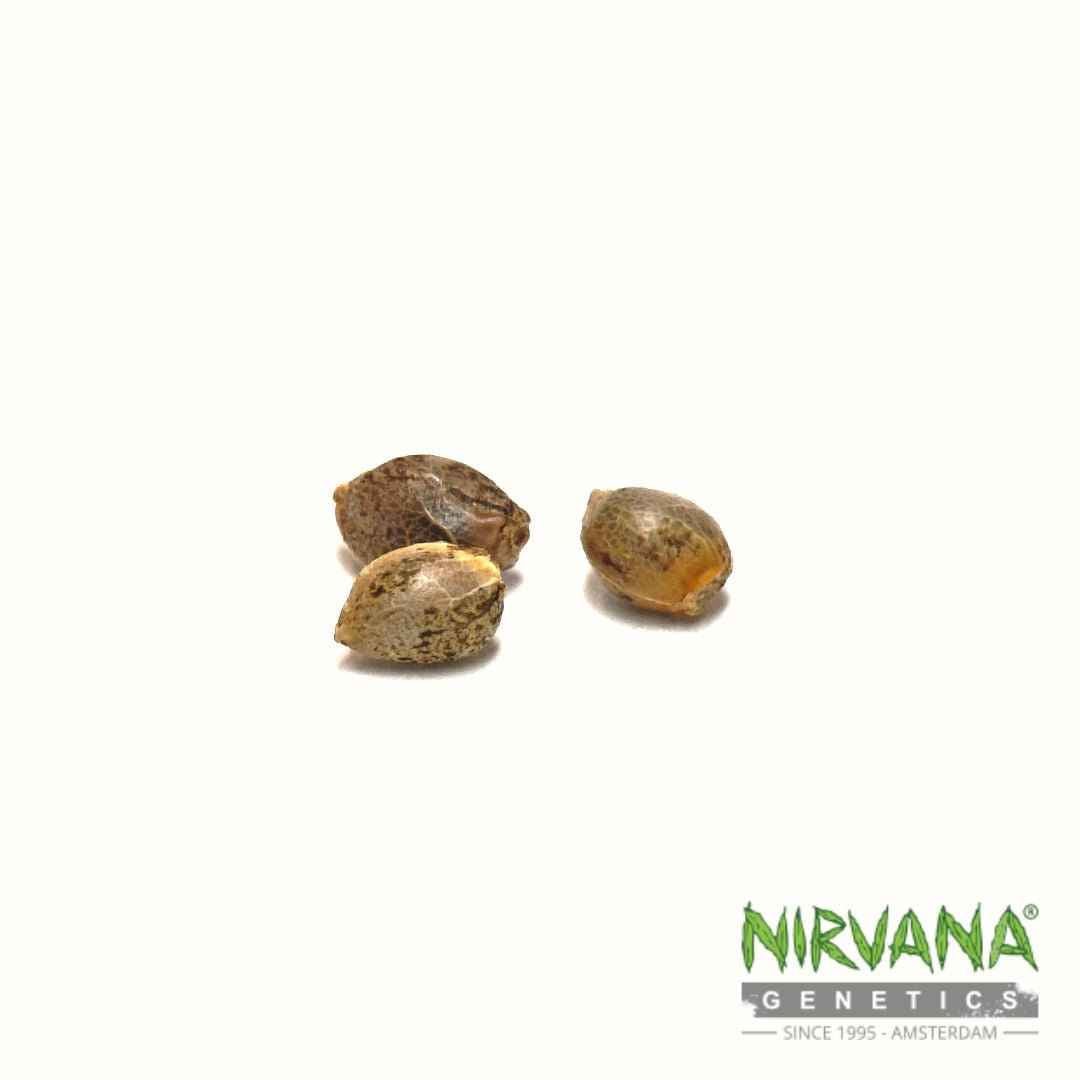
Description
Mimosa Feminized comes from crossing Clementine with Purple Punch, giving her a sativa-dominant profile with reported THC in the 22%–26% range. She's known for a pronounced stretch during flowering and can double in height once flowering begins.
Break open a bud and citrus comes through first, often compared to fresh oranges or tangerines, with sweetness, tropical undertones, and light earthy notes. Buds grow dense, resinous, and large, sometimes needing extra support in late flowering.
Indoors, she grows tall, with a habit of stretching noticeably once flowering starts. Yield potential runs high, in the 1.8 oz/ft² range indoors. Given her medium grow difficulty, strong stretching tendency, and dense bud structure, Mimosa Feminized suits growers with some experience who can plan for height and manage humidity.
Grow info
Mimosa Feminized establishes a vigorous root system early and grows with long, flexible branches spaced enough apart to help airflow later on.
Indoor growing
Indoors, flipping to flowering a bit earlier than usual is recommended, since she stretches noticeably and can double her height once flowering begins; planning for headroom is important, especially in limited spaces. She performs well in both warm and cooler climates, with an ideal range of about 68–77°F. Moderate, balanced feeding is recommended rather than heavy nutrient loads. Flowering takes about 9 to 10 weeks, and letting her run slightly longer isn't necessarily a drawback, since it can help bring out her citrus terpene profile. Indoor yield can reach up to about 550 g/m² (roughly 1.8 oz/ft²) under good conditions.
Outdoor growing
Outdoors, she benefits from ample root space, direct sunlight, and a warm, dry environment, growing tall and wide, especially in longer summers with little rainfall. Her dense, resinous buds mean humidity should be kept low; pruning some foliage can help improve airflow when humidity is hard to control. Harvest typically falls in mid- to late October, and cooler night temperatures late in the season can help intensify aroma and resin production, though rain should be avoided to prevent moisture buildup in the buds. Outdoor yield can reach up to about 21 oz per plant with long, sunny seasons.
Training and plant care
Mimosa responds well to training, with LST or SCROG recommended to manage her stretch and create an even canopy. She recovers quickly from topping and tends to respond with vigorous new growth. Training is strongly recommended for indoor growers with limited space.
Her dense bud structure raises mold risk, particularly in late flowering; good airflow and humidity control indoors, along with strategic pruning outdoors, are recommended to reduce this risk.
Flavors & effects
Flavors
Mimosa has a citrus aroma often compared to fresh oranges or tangerines, with sweetness, tropical undertones, and light earthy notes.
Effects
Reported effects include an uplifting sensation, focus, and relaxation. Some describe a fast-acting, clear-headed lift that supports a sociable mood, paired with gentle body relaxation without heavy sedation. Effects are subjective and can vary from person to person.
Given the very high reported THC range of 22%–26%, newer consumers may want to start with a small amount before taking more.
Dominant Terpenes
Myrcene
This terpene will give this strain a herbal and tropical aroma. It’s also responsible for sedating and relaxing effects.
More about Myrcene
Limonene
This terpene will give this strain a fruity and citrus aroma. It’s also responsible for stress relieving and elevated mood effects.
More about Limonene
Pinene
This terpene will give this strain a pine and woody aroma. It’s also responsible for the focusing effects.
More about Pinene